
As the great Alan Shearer said, “What pressure? Pressure is for tyres!”
Whilst that quote was right after England stood victorious against a determined Switzerland side, they also remind us of something very important on the roads.
The right tyre pressure isn’t just a technical detail; it's about safety, saving fuel, and making sure your car performs at its best.
Also, in the UK, it is a legal requirement to have the correct tyre pressure and failure to do so can result in a fine if your tyres are seriously underinflated.
In this guide, we'll show you how to easily check and maintain your tyre pressure.
How to Check Tyre Pressure
Checking your tyre pressure is a straightforward process that requires a few simple tools and a basic understanding of how to read a tyre pressure gauge.
Once you know what the pressure should be complete the following steps:
- Remove the valve dust cap from the tyre valve (place this carefully to the side. They are easy to misplace… believe me)
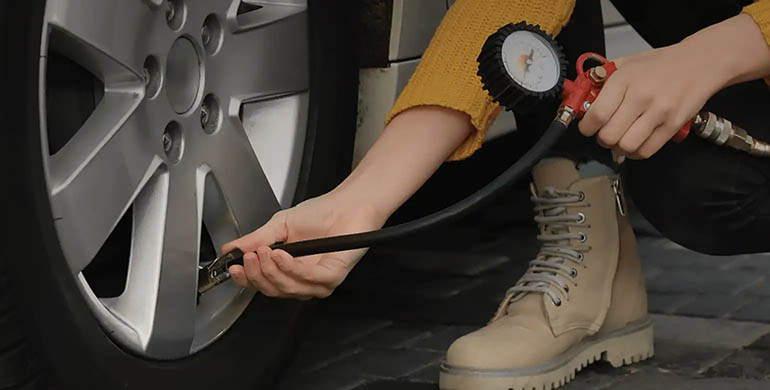
- Next, attach your pressure gauge onto the valve stem with firm and even pressure.
- Check the digital display to find out what pressure the tyre is currently at.
- If your tyre needs to be inflated, use a suitable pump and/or air compressor to add air into the tyre. Do this in small increments to ensure you do not overinflate the tyre.
- If the tyre requires to be deflated, you can use a flat-head screwdriver to release air. Simply press the tip of the screwdriver against the valve’s pin. You will hear a hissing noise as air is released.
- Repeat this for all 4 tyres, as each tyre will likely lose air pressure at slightly different rate – and the spare tyre if you have one.
- Once complete, enter your car and set the tyre pressure on your car’s system. This will ensure that the car resets the tyre pressure monitoring. If you do not remember this step, you may get false readings or warnings that your air pressure is incorrect.