
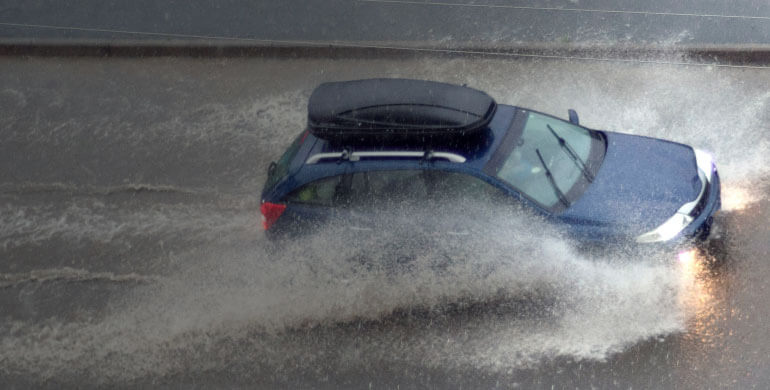
One of the most challenging surfaces to drive on is objectively wet/slippery driving conditions.
A risk and sometimes result of driving on wet surfaces is aquaplaning, that terrifying loss of control on wet roads which can happen to even the most experienced drivers and the most reliable tyres.
This unnerving experience occurs when your tyres lose contact with the road surface, essentially riding on a layer of water.
Understanding what causes aquaplaning and knowing how to prevent it is crucial for staying safe behind the wheel, especially during heavy rain or flooding.
This article will explain aquaplaning, detail the risk factors, and provide practical advice to help you avoid this dangerous situation.
What is aquaplaning?
Aquaplaning, also called hydroplaning, happens when water builds up beneath your tyres, reducing traction and control.
This occurs when the water cannot disperse quickly enough from the tread, leaving the tyres unable to maintain proper contact with the road.
In severe cases, aquaplaning can render a vehicle nearly impossible to steer or brake effectively, creating hazardous driving conditions.
Understanding the mechanics of aquaplaning and knowing how to minimise its risks is essential for any driver, especially during heavy rain or flooding.