
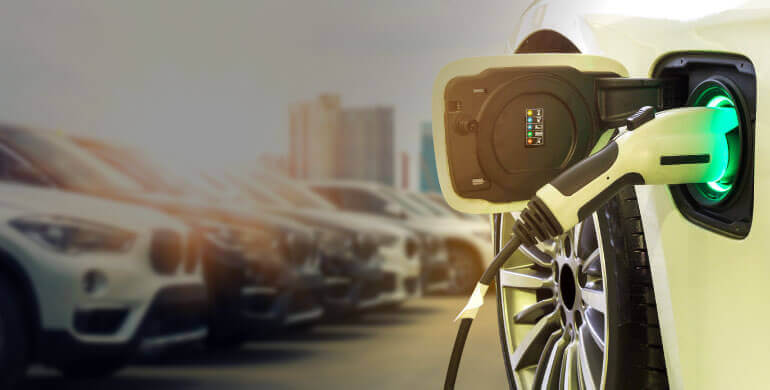
The rise in popularity of electric vehicles (EVs) has grown rapidly over the past 4-5 years. With stalwarts of the EV market such as Tesla driving demand - along with newcomers like BYD and Lucid, who also making waves in the European markets.
But, what are the different type of electric vehicles available? This is a question that can be confusing, as there are several vehicle types within this segment.
Although EVs are a smaller proportion of the automotive market, they continue to take market share away from more traditional vehicles. As such, it is important to get an understanding of the different types and their architecture.
Battery Electric Vehicle (BEV)
A BEV is solely powered by electricity and there is no combustion engine involved. Think the Tesla Model 3 or the BMW i4.
As these types of vehicles rely solely on the power distributed by the battery, they tend to have larger and more heavier batteries. Their capacity ranges from 40kW to 80kW, but as technology improves there are now some capable of delivering 200+kW
The average range of a BEV is somewhere between 100-300 miles. Often shorter than HEVs and PHEVs as they are not solely dependent on the battery (more on that to come).
The best part about a BEV is their environmental impact. Given they are running purely on electricity, they do not expel emissions when driving. So, when in use, they are the more environmentally friendly vehicle.
