
There are product launches, and then there are experiences.
When the invitation from Yokohama landed in my inbox, it was immediately clear this wasn’t going to be an ordinary tyre launch. The destination alone hinted at something different.
Rather than unveiling its latest all-season tyre on a proving ground or race circuit, Yokohama had chosen Iceland, a country renowned for its unpredictable weather, dramatic landscapes and roads that can challenge both driver and machine within the space of a few miles.
It was the perfect backdrop to introduce the BluEarth-AllSeason2, Yokohama’s latest all-season tyre, developed specifically with European drivers in mind.

With temperatures hovering around 10°C, powerful Atlantic winds, volcanic terrain and roads ranging from immaculate tarmac to loose gravel, Iceland provides exactly the sort of varied conditions that define real-world all-season driving. If a tyre is designed to inspire confidence throughout the year, there are few better places to demonstrate it.
Journalists, dealers and customers from across Europe travelled to Reykjavík to experience the launch first-hand, learn about the engineering behind the tyre and spend time behind the wheel to see whether Yokohama’s latest innovation could live up to the promises made on the presentation stage.
What followed was three unforgettable days of engineering, exploration and some of the most spectacular driving roads I’ve ever experienced.
Grindavík: A Town Shaped by Nature’s Power
Before we even discussed tyres, Yokohama wanted us to understand Iceland.
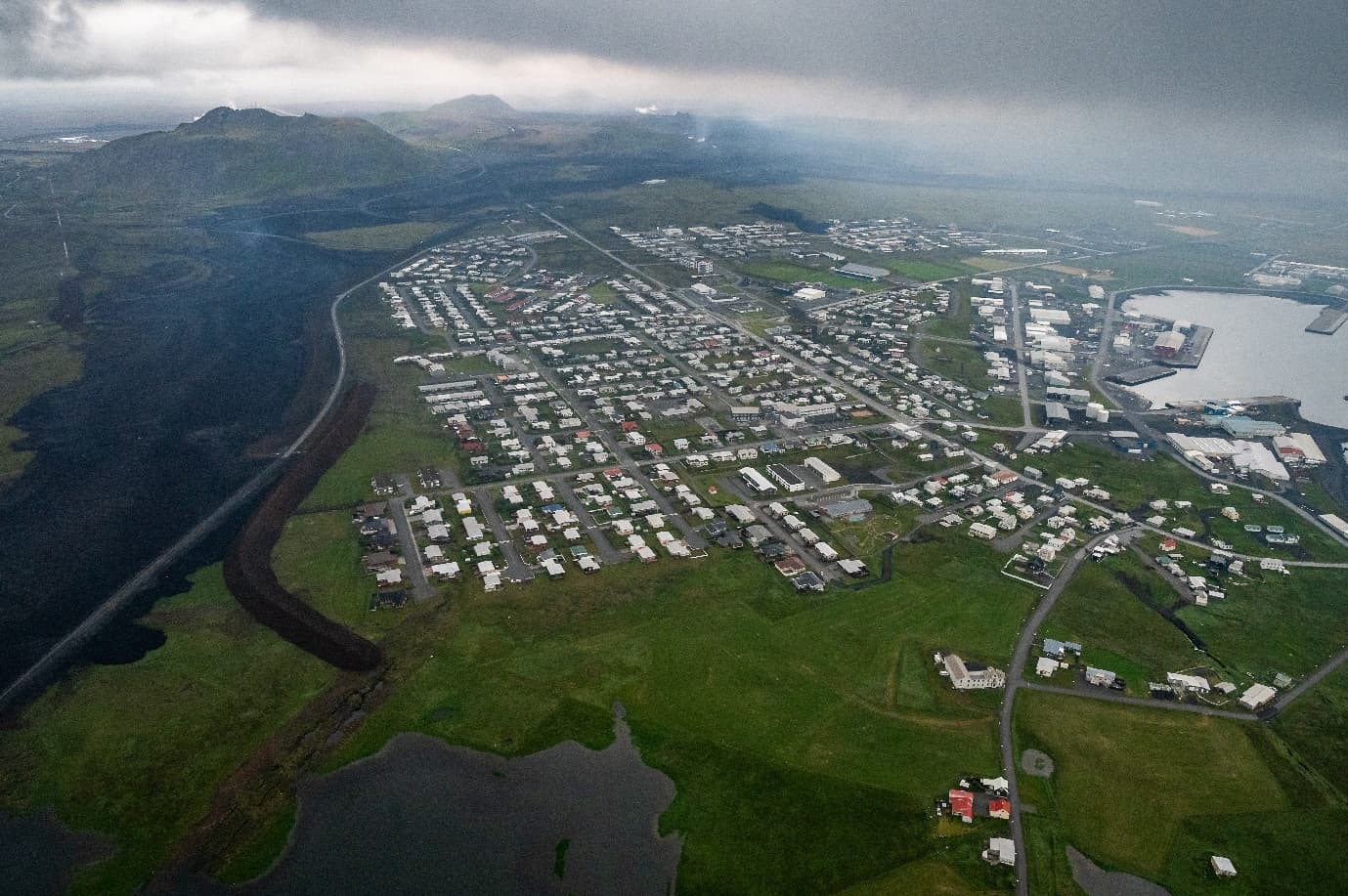
Shortly after arriving, we were taken to Grindavík, the small fishing town that has become synonymous with Iceland’s recent volcanic eruptions.
Seeing the town in person was a sobering experience.
For many people around the world, Grindavík has become a headline – a place evacuated after repeated volcanic activity threatened homes and businesses.
Walking its streets while hearing about the history of the eruptions, the evacuation of residents and the ongoing monitoring of seismic activity brought those headlines to life.
Our guide explained how Iceland sits directly between the North American and Eurasian tectonic plates. The island itself is constantly changing, shaped by volcanic eruptions, earthquakes and geothermal activity that continues beneath the surface every single day.
Standing beside roads that had buckled under the force of the earth moving beneath them and lava flowing over them was a reminder that nature always has the final say here.
It was a fascinating introduction to Iceland, and one that immediately gave me a new appreciation for the country.