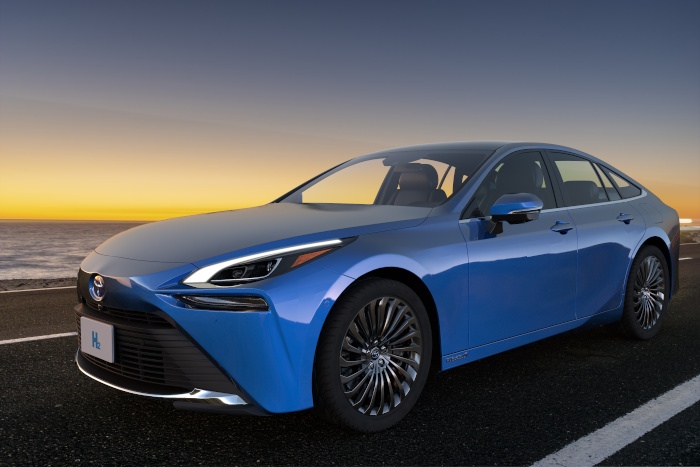
The British Touring Car Championship (BTCC) is poised to make a major step forward in sustainability with the introduction of a 100% sustainable fuel for the 2025 season – and championship boss Alan Gow believes this could just be the beginning. Gow revealed that hydrogen, rather than electric power, could be the more viable long-term solution for the series.
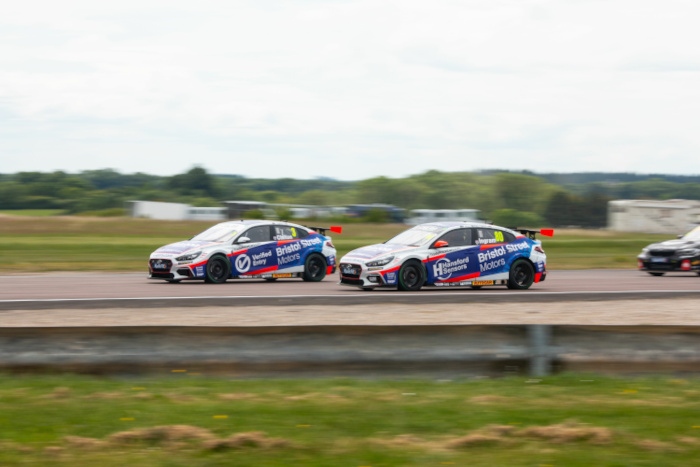
Following successful on-track testing during the final two rounds of the 2024 season, the BTCC will become the first major touring car series in the world to switch entirely to sustainable fuel. Daryl DeLeon’s Un-Limited Motorsport Cupra Leon ran the new fuel at Silverstone and
Brands Hatch, confirming performance parity and reliability.
The new Hiperflo ECO102 R100 fuel, developed by Haltermann Carless, has also been dyno-tested with Mountune, Neil Brown, Swindon, and M-Sport – the four engine builders in the series – and showed “no issues with performance or reliability”.
Gow said the switch marks another milestone in the championship’s long-standing commitment to innovation:
“Going back to the early 90s, we were the first touring car championship to introduce catalytic converters to the cars because we needed to be relevant,” Gow explained in an interview with Diagonal Comms, the BTCC’s media agency.
“Through the history of the BTCC, if you only look at fuels, then we have had cars running on bio-fuels, we’ve had cars running on LPG and we’ve had diesels, and we are probably the only championship that has experimented with all those things and allowed those cars to race as a demonstration of what different fuels can do within motorsport."
“I’m proud of the fact that over the last 30-odd years, we’ve been at the forefront of that and if we can now become the first major touring car championship in the world to have a 100% sustainable fuel – and by that I mean a proper sustainable fuel and not just one where some ethanol has been chucked into the mix – then it will be a great feather in our cap.”
A Changing Landscape In BTCC
This move comes as the BTCC also ends its hybrid era, which lasted just three seasons. While electrification continues to dominate the wider automotive industry, particularly in the UK due to the zero-emission vehicle (ZEV) mandate, Gow suggests motorsport might take a different path.Recent closures, like Vauxhall’s Luton van plant, have sparked debates around the ZEV policy’s impact on UK manufacturing. Meanwhile, brands like Jaguar have already announced full EV line-ups, with other manufacturers expected to follow despite delays to the ban on petrol and diesel vehicle sales.
However, consumer confidence in EVs remains mixed, especially due to concerns about charging infrastructure and battery range – concerns that Gow says are especially relevant in a motorsport context.
“If we went down the political route then we would all be in Electric Vehicles, which are proving to not be the answer,” he said. “EVs have a very limited value within motorsport and there has been little take-up as we know that they don’t last long and they are very heavy, and I think hydrogen is probably going to be the next big thing – either through a hydrogen fuel cell attached to an EV motor or attached to an internal combustion engine."