
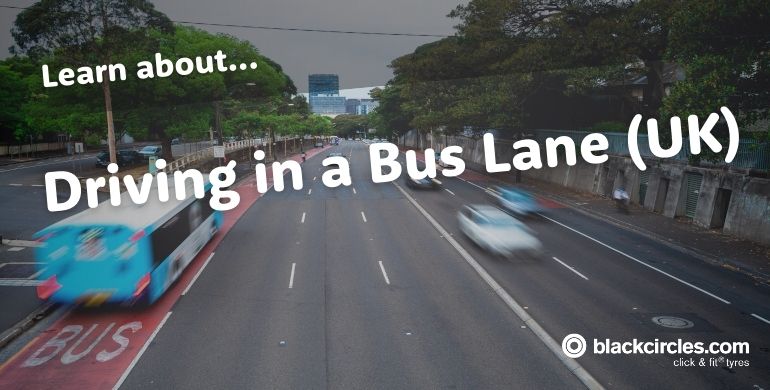
As you're likely aware, dedicated bus lanes are available throughout the UK to make public transportation more efficient.
These lanes help bus drivers navigate UK roads and bypass traffic congestion, whether that be in city centres, dual carriageways, or even motorways.
This makes the appeal of using buses as a mode of transport much higher for the British population, as in some instances, commuting via bus even quicker than driving yourself, particularly on dual carriageways and motorways that have high traffic.
But they are called bus lanes for a reason – only buses (and in some cases, taxis) are allowed to drive through them!
However, in the case of you accidentally driving through a bus lane, you might want to know what the fines are, or maybe even just understand the rules and regulations of bus lanes in the UK – this article will cover all things bus lanes today.
Types of Bus Lanes
Understanding the different types of bus lanes is essential for every driver, much like knowing the rules before setting off on a long journey.
In the UK, bus lanes are generally categorised into two types:
Permanent Bus Lanes
These lanes are in effect 24 hours a day, seven days a week.
They are typically found in busy urban centres where uninterrupted public transport is a priority.
Since these lanes are always active, you must always be cautious not to inadvertently drive into one.
Time-Restricted Bus Lanes
These lanes operate only during designated times, usually during peak hours when the need for efficient public transport is highest.
Outside these specific hours, the lane may be available for general traffic.
However, it is vital to check local signage carefully, as the times and conditions can vary between different areas.