
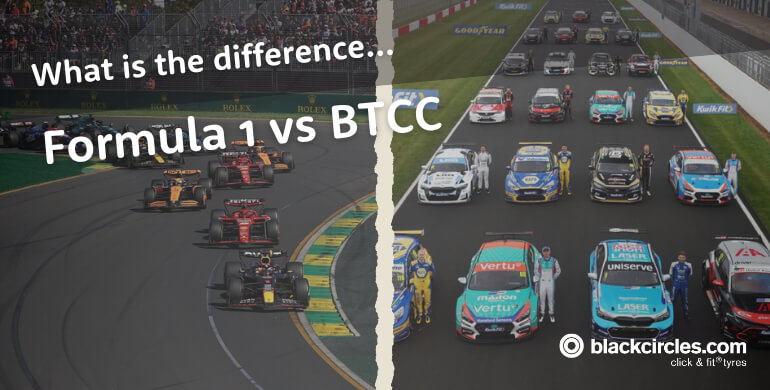
Formula 1 and the British Touring Car Championship (BTCC) might both serve up high-octane thrills, but beyond the roar of engines and the checkered flags, these two racing series couldn’t be more different.
One is a global spectacle of cutting-edge technology and elite precision; the other is a fiercely competitive, wheel-to-wheel battleground right here in the UK.
So what really sets them apart? From the cars and race formats to the tyres on the tarmac and the fan experience trackside, this blog dives into the key differences between Formula 1 and the BTCC.
Whether you’re into slick open-wheel speed or bumper-to-bumper touring car action, understanding the contrast will give you a whole new appreciation for both.
Is BTCC Faster Than Formula 1?
No - the British Touring Car Championship (BTCC) is considerably slower than Formula 1.
Formula 1 cars are purpose-built, open-wheel machines designed for maximum speed, downforce, and precision.
In contrast, BTCC cars are based on production saloons, modified for racing but nowhere near the performance level of a Formula 1 car.
That said, what BTCC lacks in pace, it makes up for in close-quarters action, contact-heavy overtakes, and unpredictable racing.
Key Differences
| Feature | Formula 1 | BTCC |
| Top Speed | ~360 km/h (223 mph) | ~240 km/h (149 mph) |
| Lap Times (Brands Hatch GP) | ~1:20 | ~1:32–1:35 |
| Car Type | Open-wheel, single-seater | Modified production-based touring cars |
| Contact Rules | Strictly penalised | Contact allowed (within reason) |
| Race Format | 1 Grand Prix per weekend | 3 sprint races per weekend (with reverse grid) |
| Tyre Supplier | Pirelli | Goodyear |
| Pit Stops | Strategic and mandatory in dry races | No pit stops in standard format |
Example Comparison: Silverstone Circuit (GP Layout)
- F1 Pole Time (2023): ~1:26 (Max Verstappen)
- BTCC Qualifying Average (2023 Silverstone National Layout): ~57 seconds
- BTCC Est. Time on Full GP Layout: ~2:05–2:10 (estimated from previous touring car data)
Formula 1 cars are approximately 35–40 seconds faster per lap on the full Grand Prix layout at Silverstone — a huge margin that highlights F1’s superior aerodynamics, acceleration, cornering speed, and braking.