
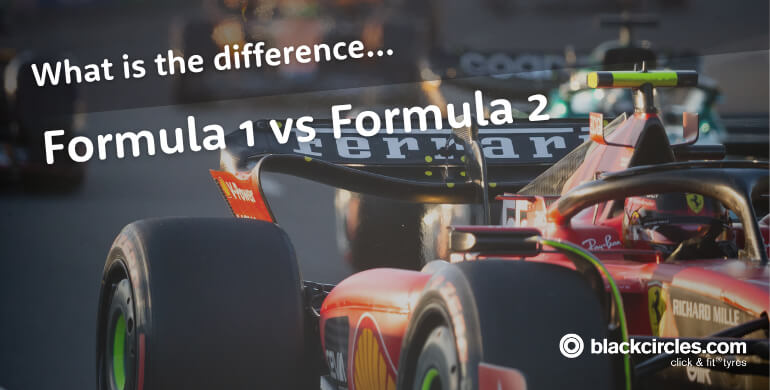
At first glance, Formula 1 and Formula 2 might look pretty similar with same style of cars, same race weekends, and a lot of the same tracks. But dig a little deeper, and you'll find they’re actually really different.
F1 is the top tier of motorsport, with the fastest cars, the biggest teams, and the most advanced technology. The place that every race driver wants to be!
F2, on the other hand, is all about developing future F1 stars. It’s a proving ground where young drivers race in identical cars to show what they’re really made of.
Whether you're new to the sport or just curious about the details, here’s what really sets F1 and F2 apart.
Is Formula 2 Faster Than Formula 1?
No — Formula 2 is not faster than Formula 1
F1 cars are significantly quicker due to more advanced engineering, more powerful hybrid power units, better aerodynamics, and faster acceleration. Formula 2 is a series designed as a stepping stone to F1, so it uses standardised equipment to focus on driver talent over car development.
Key Differences:
| Feature | Formula 1 | Formula 2 |
| Engine Power | ~1000 hp | ~620 hp |
| Top Speed | ~360 km/h | ~335 km/h |
| Lap Times (Monza) | ~1:20 | ~1:32–1:35 |
| Development Freedom | Full team R&D | Spec chassis, engine, and tyres |
Example Comparison: Circuit de Barcelona, Spanish GP
At high-speed circuits like Circuit de Barcelona, the difference in performance is crystal clear. F1 cars typically qualify 12–15 seconds faster per lap than their F2 counterparts. That gap comes from superior acceleration, cornering speed, braking efficiency, and DRS-aided straights.
For example:
- F1 Fastest Qualifying Lap (2024 Spanish GP): ~1:11
- F2 Pole Time (2023 Spanish GP): ~1:24
That’s nearly a full sector’s worth of time gained