
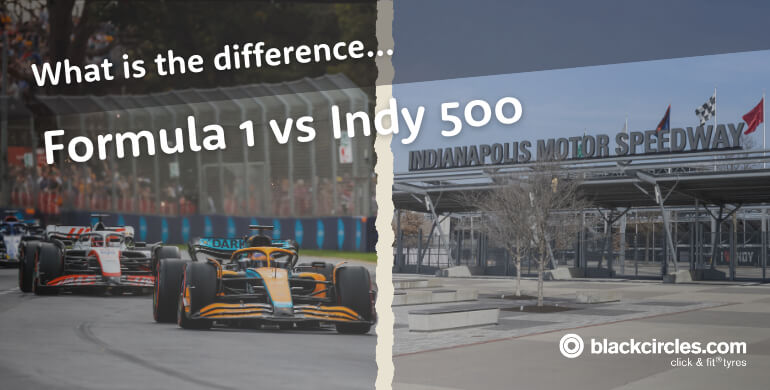
Is the Indy 500 Faster Than Formula 1?
In terms of top speed — yes. In terms of lap time, race pace, and circuit complexity — no.
The Indy 500 is one of the world’s fastest and most iconic motorsport events, with cars averaging over 375 km/h (233 mph) over a full lap. However, these speeds are achieved on an oval circuit with minimal braking and only four corners.
Formula 1 cars are engineered for vastly more complex road courses and feature superior cornering performance, downforce, and braking power — making them much quicker on most tracks.
Key Differences
| Feature | Formula 1 | Indy 500 (IndyCar) |
| Top Speed | ~360 km/h (223 mph) | ~380–385 km/h (236–239 mph) |
| Lap Time (Indy 500) | Not applicable (F1 doesn’t run ovals) | ~39–41 seconds (at avg. 375+ km/h) |
| Track Type | Road & street circuits | Oval (2.5 miles, four corners) |
| Downforce Setup | High downforce | Low drag “superspeedway” trim |
| Event Duration | ~2 hours | ~3+ hours (500 miles) |
| Race Format | Single Grand Prix | Single oval race, part of IndyCar season |
Example Comparison: Pure Speed
- Indy 500 Qualifying (2023):
- Average speed: ~234 mph / 376 km/h
- Top speeds: up to ~386 km/h on straights
- Formula 1 Monza Qualifying (2022):
- Top speeds: ~360 km/h with DRS
While the Indy 500 achieves higher top speeds, the circuit design is entirely different. F1 cars would struggle on ovals, due to their setup, fragility, and the danger of running without proper oval-tuned safety measures.