
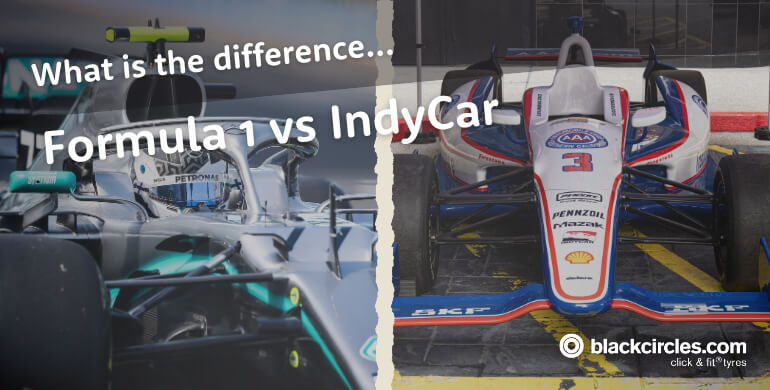
Is IndyCar Faster Than Formula 1?
No, not overall — while IndyCars can reach higher top speeds on oval circuits, Formula 1 cars are consistently quicker across most tracks.
Formula 1 machinery benefits from superior cornering speeds, hybrid power units, cutting-edge aerodynamics, and highly efficient braking systems. IndyCar, while fast in a straight line, uses a spec chassis with limited aerodynamic development and no hybrid technology. As a result, F1 typically outpaces IndyCar in overall lap times and race performance.
Key Differences
| Feature | Formula 1 | IndyCar |
| Engine Power | ~1000 hp (1.6L V6 Turbo Hybrid) | ~700 hp (2.2L V6 Twin-Turbo, no hybrid) |
| Top Speed | ~360 km/h (223 mph) | ~380 km/h (236 mph on ovals) |
| Lap Times (COTA) | ~1:36 | ~1:46–1:50 |
| Development Freedom | Bespoke team-developed cars | Spec chassis (Dallara DW12), limited aero kits |
| Overtaking Systems | DRS (Drag Reduction System) | Push-to-pass (temporary horsepower boost) |
Example Comparison: Circuit of the Americas (COTA)
The Circuit of the Americas is one of the few tracks shared by both Formula 1 and IndyCar. The lap time comparison clearly illustrates the performance gap:
- F1 Pole Time (2022 COTA): ~1:34.3
- IndyCar Pole Time (2021 COTA): ~1:46.0
That’s an 11+ second difference per lap, showcasing Formula 1’s advantage in acceleration, downforce, and braking—despite similar peak speeds.