
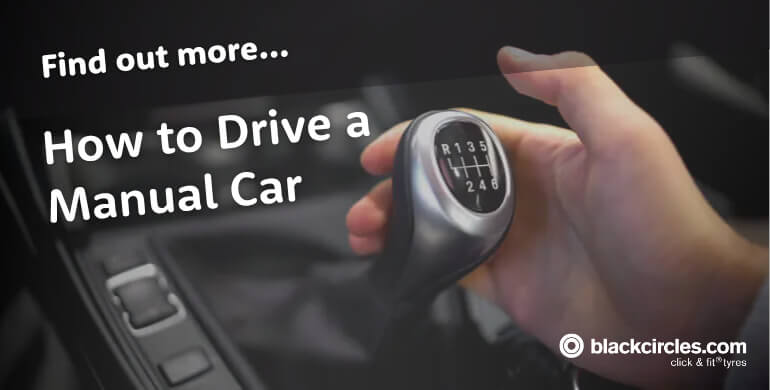
Manual transmission remains the most common driving style in the UK – as of 2022, manual cars accounted for 70% of the UK’s 31.7 million road cars.
Learning to drive a manual car provides the flexibility to operate both manual and automatic vehicles, making it a recommended approach for years.
By mastering manual driving during your lessons, you gain a broader skill set and can transition to automatic driving later, if preferred, once you’ve attained your licence.
Despite the growing popularity of automatic cars – 71% of new cars registered in the UK were automatic in 2023 – learning to drive a manual car remains the more versatile and beneficial choice.
So, how do you drive a manual car? This article will serve as your guide to learning the essentials of manual transmission driving.
Basics of Manual Transmission
Before you start driving a manual car, it’s important to understand how it operates and what makes it different from an automatic.
Unlike automatic cars, where the gears change automatically, manual cars require the driver to shift gears using the gear stick and clutch pedal.
A manual car features three pedals – the clutch, brake, and accelerator – compared to just two in an automatic (automatic does not have a clutch pedal).
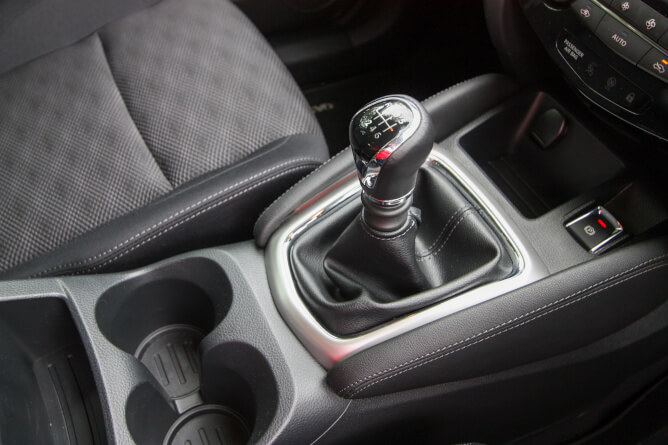
The clutch pedal is key to engaging and disengaging the engine from the transmission, allowing you to change gears smoothly. We will cover how to smoothly handle your clutch pedal later in this guide.
The gear stick, located in the middle of the car, is used to select the appropriate gear depending on your speed and driving conditions.
The gear positions in a manual car are straightforward once you’re familiar with them:
- Neutral: The default position where the gear stick is not in gear and the engine is disconnected from the wheels.
- First Gear (1): Used to get the car moving from a complete stop.
- Higher Gears (2, 3, 4, 5, etc.): Shifted into as the car gains speed, with each gear offering a balance between power and efficiency.
- Reverse (R): Self-explanatory – for reversing.
Mastering the basics of manual transmission is about understanding how the clutch, gear stick, and accelerator work together to give you control over the car.
It may seem tricky at first, but with practice, it becomes second nature – by learning these fundamentals, you’ll build the confidence needed to tackle driving a manual car with ease.