
There has been widespread discussions of electric vehicles in recent years, with many considering EVs to be the answer to tackling emission problems around the world.
This can be seen particularly in the UK, with councils across the country deciding to phase in Low Emission and Ultra Low Emission Zones to tackle these issues.
The introduction of these zones, along with perceived benefits of owning an electric car, has seen a vast increase people switching to electric, with over 450,000 hybrid/electric vehicles being registered in the UK in 2023 alone.
An alternative to these sorts of vehicles that has peaked interest of many motorists globally is hydrogen powered cars, also known as fuel-cell electric vehicles (FCEVs).
FCEVs are a bit of an unknown entity, with many car enthusiasts wondering what these types of vehicles are and how they might shake up the landscape of motoring in the coming years.
The purpose of this article is to understand what hydrogen powered cars are, what FCEVs have been produced, and what impact they might have on the motoring industry.
What are fuel-cell electric vehicles?
Fuel-cell electric vehicles (FCEVs) represent a fascinating leap forward in automotive technology, merging eco-friendliness with high performance.
At the heart of each FCEV is a fuel cell, a device that generates electricity through a chemical reaction between hydrogen and oxygen, with water and heat as the only byproducts.
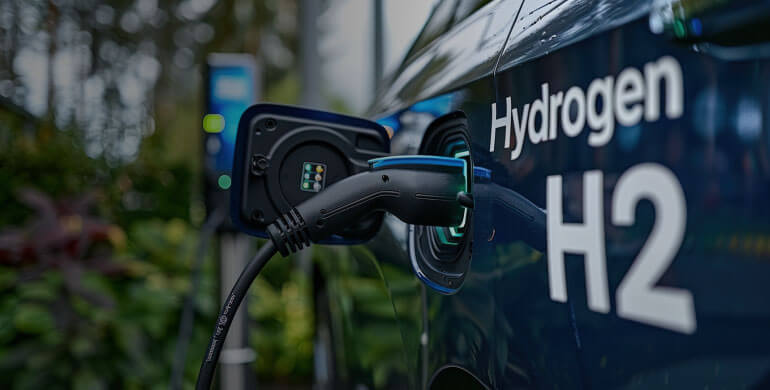
Unlike traditional electric vehicles that require charging from an electrical source, FCEVs run on hydrogen that you refill, much like gasoline in conventional cars.
Refuelling of a hydrogen car takes just a few minutes, offering a convenience similar to what we're accustomed to with petrol or diesel vehicles, yet with none of the emissions that contribute to pollution and climate change.
The magic of FCEVs lies in their fuel cells, which efficiently convert hydrogen gas stored in high-pressure tanks into electricity. This electricity then powers the vehicle’s electric motor, propelling it forward without combustion or emissions.