
If you are caught speeding in the UK, whether that’s through physical police presence or speeding cameras, a monetary fine and points on your licence will be issued.
Speeding is against the law and if caught braking it, you may pay the price for doing so.
This over-speeding fine guide will outline what the charges are for different offences for each UK country, how much points you may receive, and what the next steps are if you have been issued a fine.
What Are the Speeding Laws in the UK?
In the UK, breaking any sort of speed limit means you’re breaking the law.
Typically, urban roads will have speed limits up to 30mph, with the most common speed limits enforced being 20 mph and 30 mph.
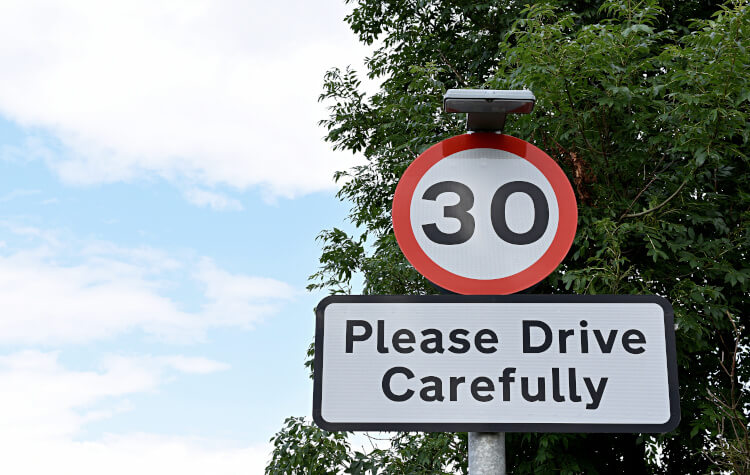
Single carriageways are usually 60 mph, dual carriageways are typically 70mph, and motorways have a maximum speed limit of 70 mph, unless otherwise stated by signage.
It’s also important to note that Wales operates under different default speed limit rules. Since September 2023, the default speed limit on restricted roads in Wales has been reduced to 20 mph, unless signs indicate otherwise.
This differs from England, Scotland, and Northern Ireland, where the default speed limit on restricted roads remains 30mph.
Drivers travelling between England and Wales should be particularly mindful of this change, as enforcement is active and penalties apply in the same way as elsewhere in the UK.
Speed limits can vary depending on road type, vehicle type, weather conditions, and local authority decisions, so drivers must always follow posted signs.
These speed limit laws are imposed by the
Road Traffic Regulation Act 1984.