
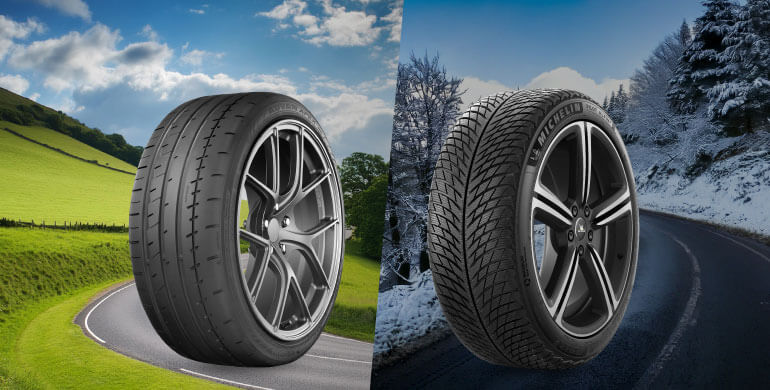
The distinction between summer and winter tyres is fairly straightforward – summer tyres are designed for warmer conditions, while winter tyres excel in colder, more challenging weather.
While the difference between the two is easily explained on the surface, the details of what makes these two tyre types different is a little more complex.
This article will be distinguishing between the two season tyres, what the most popular models are, and what tyre type you should consider.
What Are Summer Tyres?
Summer tyres are designed to perform best in warmer conditions, optimally working in temperatures above 7°C.
They provide excellent grip, handling, and braking performance on both dry and wet roads during the hotter months.
Key Features of Summer Tyres:
- Optimised Tread Design – Summer tyres feature shallower tread depths and fewer sipes, allowing for greater road contact and improved grip.
- Firm Rubber Compound – The rubber used in summer tyres stays firm in high temperatures, maintaining stability and precise handling.
- Superior Dry and Wet Performance – These tyres are designed to quickly disperse water, reducing the risk of aquaplaning while providing strong cornering and braking efficiency.
However, when temperatures drop below 7°C, summer tyres begin to harden, reducing their ability to grip the road. This is why they are not recommended for winter conditions, especially when faced with ice and snow.
Buy summer tyres