
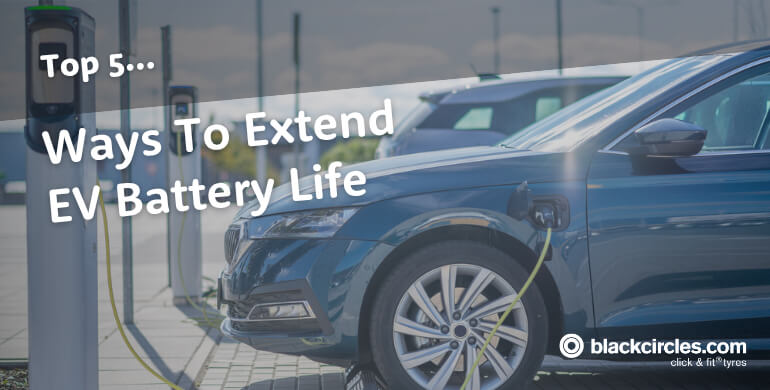
Whether it be the environmental benefits or the big savings thanks to EV energy tariffs, EVs have continued to perform strongly. In fact, just last April, it was reported that European EV sales had gone up by 51%, accounting for one in five new cars!
With an influx of first-time electric motorists on the road, there is some EV etiquette that they might not be well-versed in, especially when it comes to the battery. Don’t fret, though, as we have five invaluable bits of advice to help you extend your EV battery life.
Note: Remember that EV battery life is long-term battery health, while range is its daily mileage.
5 Best Charging Habits for EV Battery Health
#1) Keep Your EV Battery Between 25% and 75%
Why? Just like the lithium-ion batteries found in your other devices – like the phone you’re probably reading this on – frequently charging your battery to 100% can be detrimental.
Think of it like your dinner plate: it’s easy to find some space for food when it’s 0-80% full, but after that point, it starts to get a little cramped. With your EV battery, higher voltage is required to pack those remaining lithium ions in, causing physical and chemical stress that leads to the battery degrading and permanently losing its charging capacity.
The same can be said for when the battery is under 20%, as it works overtime trying to find that remaining ‘juice.’ Over time, this tautness can result in the electrodes cracking, potentially leading to a short circuit that will leave your battery completely dead.
For that reason, it’s best to aim for that optimum charge window of 25-75%.
While it’s usually advised to avoid charging overnight, it’s worth noting that many EV models have a built-in buffer to stop the battery from getting to either 100% or 0% charge. You should try to use scheduled charging where possible and avoid leaving the car sitting at 100% for long periods.
#2) Drive Smoothly and Avoid Constant High Speeds
No one is expecting you to cut your speed to the point where a snail can overtake you, but the formula is simple:
The quicker you drive => The battery drains faster => You need to charge the battery, risking degradation
So, keeping it slow and steady is an important and easy step when trying to help improve your battery’s longevity.
Do Tyres Affect EV Battery Range and Life?
For EV battery range, it’s worth considering which tyres your car has equipped: a Low Rolling Resistance (LRR) tyre – such as the Bridgestone Ecopia EP500 - will help reduce the energy lost when driving, whilst a High-Torque Management tyre – like the Michelin Pilot Sport EV – is built to handle sudden bursts of speed without wearing down prematurely.
This feeds into how tyres affect EV battery life as well:
EV-ready tyres => Reduced energy use => Better range => Fewer charging stops => Less risk of battery degradation