
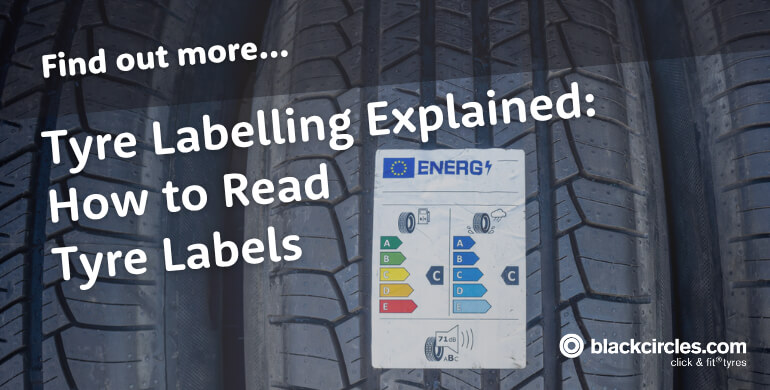
You might think that choosing the right tyre doesn’t go beyond making sure it’s the right size for your vehicle. Surely that information-stuffed sticker is just for show?
No. In fact, it’s every bit as important in the decision-making process as picking the correct fit.
Every new tyre sold in the UK carries a label that rates it on three things: how much fuel it uses, how well it grips in the wet and how much noise it makes. It looks simple enough – a strip of letters, a decibel figure and a couple of small icons. But it’s easy to skim past without really knowing what any of it means or which parts matter for the way you drive.
Don’t fret, though, as we’ve got you covered with this very guide. We’ll steer you right, breaking down what each rating means and how to bear them in mind when looking for the right tyres for your car.
What Is a Tyre Label?
Contrary to what you might think, the tyre label is not a manufacturer’s marketing sticker: it is a legal requirement.
Every new tyre sold for cars, vans and buses or lorries must display one at the point of sale. That can be in a shop, printed on a delivery note or shown online next to the product listing.
It exists so you can compare tyres on a like-for-like basis before you buy, just as an energy label helps you compare fridges or washing machines. Underneath the letters and numbers, the label reports the results of standardised tests that every tyre must pass before it can legally be sold. It’s not a brand’s own claims about its product.
The label covers three headline ratings:
- Fuel efficiency (also called rolling resistance) – graded A to G
- Wet grip – graded A to G
- External noise – shown in decibels, plus a 1-to-3 sound wave symbol
Two further icons can appear alongside these: a snowflake symbol for tyres rated for severe snow conditions and an ice grip symbol for tyres tested specifically for icy roads (mainly relevant to Nordic and studded winter tyres and rarely seen on standard UK tyres).