
Particularly when you haven’t sat a theory test before, the unknown of what’s around the corner can be daunting.
Not knowing what to take to your test, mandatory or compulsory, can make the experience of approaching your theory test even more intimidating.
Use this article as a guide to better understand what to expect going in to your theory test, especially regarding what to bring to your theory test.
What You’ll Need for Theory Test
When arriving to a theory test centre for your assessment, there’s certain things you need to make sure you bring.
The following are the necessary items you need to bring to your theory test:
Your Photocard UK Driver’s License
Your photocard driving licence is the most important item you need to bring to your theory test.
This is mandatory, so without it you won’t be allowed to take the test, and your booking fee will be lost.
The test centre staff will check your licence to confirm your identity, so make sure it’s valid and in good condition before the day of your test.
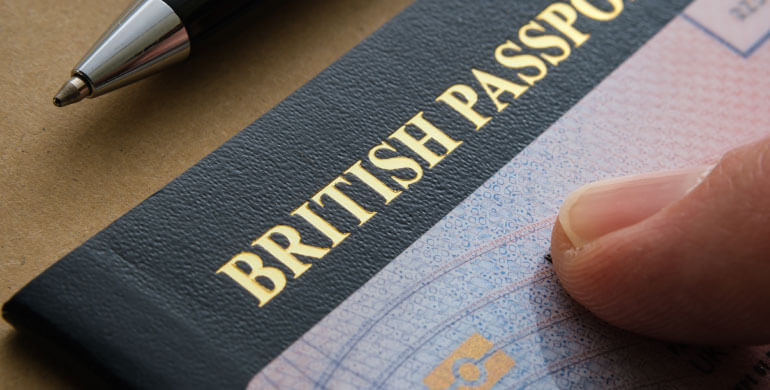
If you have a paper driving licence (issued before 1998), you must also bring a valid passport as proof of identity. Without a passport, your paper licence alone won’t be enough to sit the test.
If you don’t have a passport, you’ll need to apply for a photocard licence before booking your theory test.
It's always a good idea to check that your personal details on your licence, such as your name and date of birth, match the information on your test booking. Any discrepancies could cause issues on the day.
To avoid last-minute panic, keep your driving licence somewhere safe and make sure to bring it with you on test day.
Arriving at the centre only to realise you’ve left it behind can be frustrating – so double-check before you leave!
Glasses/Contact Lenses (if needed)
If your vision is impaired and you wear glasses or have contact lenses, you need to bring them with you and wear them during the test, especially for the hazard perception section, where clear vision is essential for spotting potential dangers.
Even if your vision is only slightly compromised, wearing your glasses or contact lenses is strongly recommended to ensure you can clearly see and react to hazards in the video clips.
Failing to do so could affect your ability to pass the test, as identifying developing hazards quickly is a key part of the assessment.